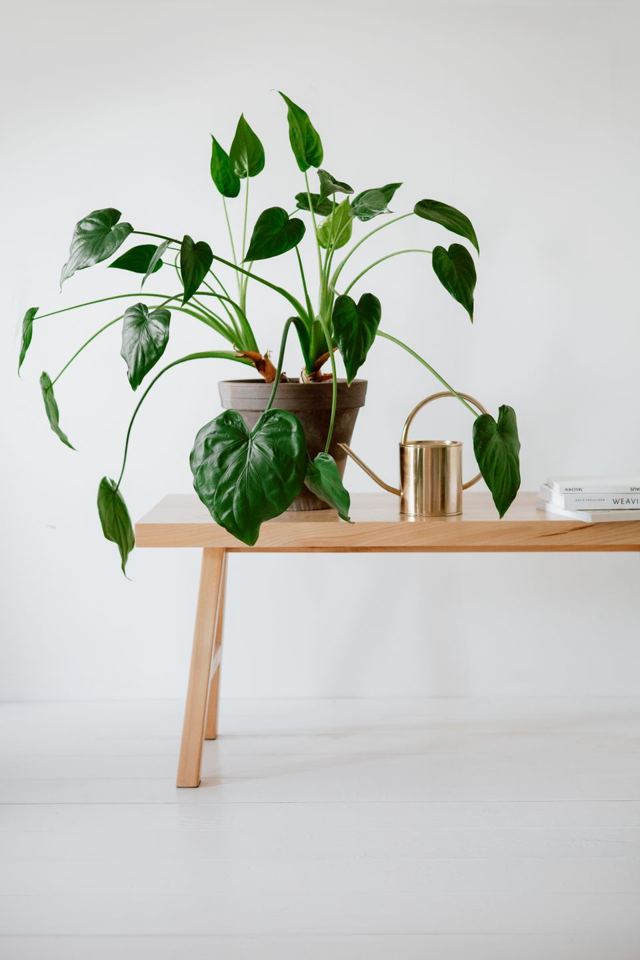
An indoor watering can moves between plants, furniture and the tap, so a large capacity is not automatically practical. For a few small pots on a windowsill, a controllable spout, comfortable grip and a shape you can fill beneath your own tap may matter more than avoiding every additional trip for water.
Consider the route between plants
Walk your usual watering route and note which pots stand close together or at a greater height. A long, narrow spout may help you reach between leaves, but also requires additional storage depth. A short spout is compact yet may reach a pot behind other plants less conveniently. Measure shelf space including the projecting tube. The advertised capacity tells you little about the actual footprint that must be accommodated between uses.
Check filling and carrying together
Compare the can’s height and filling opening with the space under your tap. A small opening directly below the handle is not conveniently accessible beneath every tap. Include the water when assessing weight. Check how you hold the handle both while carrying and while tipping. Some shapes allow several hand positions; what matters is whether you can make the transition in a controlled way without repeatedly changing to an awkward grip.
Keep the flow manageable
Consider whether you mainly reach small pots precisely or fill larger containers. A removable rose is not necessary for every indoor job and may be inconvenient around furniture. Check whether the spout remains accessible when you set the can down and how remaining water is emptied. The can itself does not establish a plant’s watering requirement. Follow the needs of the particular plant and its actual location rather than treating container size as a watering instruction.
Inspect material, joins and storage
Read the intended uses and care requirements. On metal cans, examine connections and coating information; on plastic models, consider handle attachments and access to the interior. A decorative container is not automatically an easy-to-clean tool. Initially place a new can somewhere insensitive to moisture and check its intended operation before giving it a permanent position on delicate furniture. A fixed storage place also makes emptying easier and prevents the can from repeatedly obstructing the room.
Before you buy
- Compare spout length with plant positions and shelf depth.
- Check access to the filling opening beneath your tap.
- Include water weight and changes of grip.
- Consider emptying access, care and a fixed storage place.
An indoor watering can should suit the route between tap and plants. Controlled pouring is more useful than a large capacity you seldom fill.