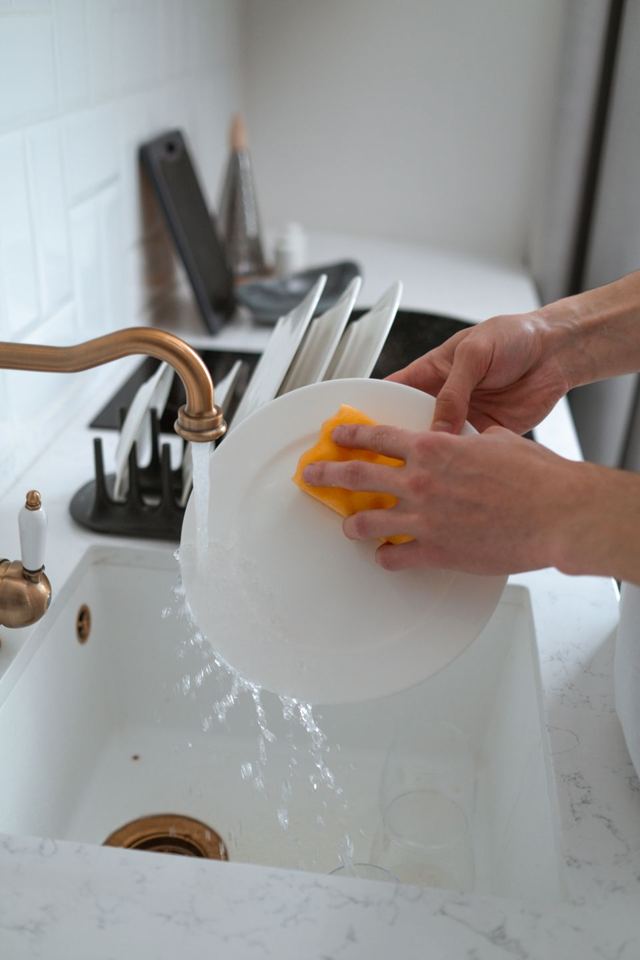
Dish sponges can look similar while working differently. A soft side, an abrasive layer and a particular shape serve different purposes. Do not choose by colour or pack size alone. Start with the items you want to clean and the tools their manufacturers permit. That check is particularly relevant for coated cookware, where unsuitable abrasion can be a poor choice.
Do not assume the rough side is suitable
Read whether the scouring surface suits the intended item. Colour codes differ between brands and ranges. “Non-scratch” describes a product characteristic under particular conditions rather than permission to use it on every coating. When uncertain, follow only the method recommended by the item’s manufacturer.
Stuck-on residue is not a reason to scrub harder immediately. First check whether soaking or another gentle approach is permitted by the care instructions. A low sponge price does not compensate for damage to the object. Specialist tools should address a specific task for which they are approved.
Compare size and grip in practice
A large sponge may be comfortable on plates but will not fit every cup. Narrow shapes or gripping grooves help some hands and inconvenience others. Try a small pack and see whether you can guide the tool with control without needing to squeeze it excessively hard.
Assign the job and drying position
Do not use a dish sponge casually on shoes, floor marks or bathroom surfaces as well. Clear assignment is easier than reconstructing its previous uses later. Remove visible debris after use and follow the sponge’s care guidance. Those steps alone are not a promise of complete germ removal.
Choose a holder where it can drain and dry rather than remaining in a puddle. Inspect regularly for smells, material breakdown and retained dirt. Replace a sponge that cannot be kept usefully clean. A fixed calendar will not suit every level of use or every household routine.
Keep spare stock manageable
Store replacements dry and apart from used examples. Compare cost per piece only among products that are suitable in the first place. A large pack with the wrong scouring surface is not a useful supply. After several weeks you will understand demand better and can restock without accumulating unnecessary shapes and specialist coatings.
Before you buy
- Compare the abrasive layer with the item’s care guidance.
- Do not choose by sponge colour alone.
- Clearly assign sponges used for dishes.
- Plan draining space and regular condition checks.
A suitable sponge respects the treated surface through appropriate use. Size, maintenance and timely replacement belong in the purchasing decision too.