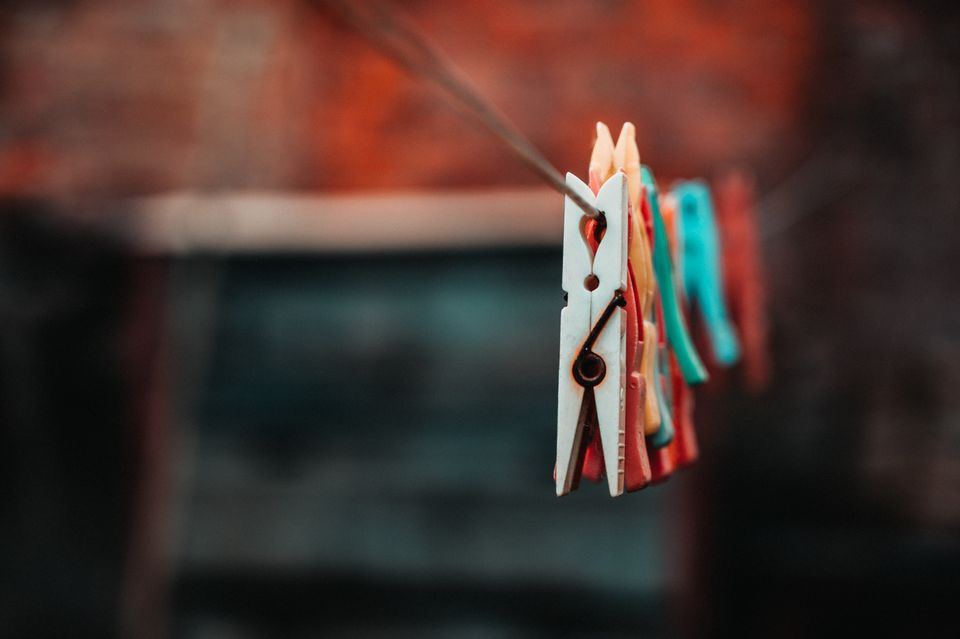
Clothes pegs are the kind of small purchase that easily ends up in the trolley as a bulk pack. Yet their openings, springs and contact surfaces vary considerably. The right choice depends on whether you secure light cloths, thick hems or more delicate garments. Begin with a small quantity that suits both your line and your laundry.
Compare them against a typical hem
Look at the surfaces that will hold the fabric. Visible burrs, rough patches and sharp edges are undesirable. A soft insert may seem comfortable, but it also needs to be clean and undamaged. A “soft” claim on the packaging cannot replace inspecting the product you actually receive.
Compare the opening with your washing line or drying-rack rails. The peg needs to accommodate the fabric without being forced apart. Follow care instructions for delicate textiles; some items are dried flat and need no pegs at all. Visible marks also vary with the fabric and the point where it is clipped.
Spring strength is a practical matter
Open several pegs from a trial pack. Can you repeat the movement comfortably? Very firm springs will not suit every hand. Larger gripping tabs may make operation easier, but occupy more room between closely hung items. The strongest peg is therefore not necessarily the most appropriate one.
If you dry washing outdoors, check that the product is intended for outdoor use. Working well in calm conditions does not guarantee performance in every kind of weather. Choose the location and fastening arrangement around actual conditions rather than leaving vulnerable laundry outside because the pegs seem unusually strong.
Store, inspect and add selectively
A small basket or bag keeps pegs together beside the rack. It should be easy to reach and should not silently fill with water when used outdoors. Store pegs after use according to their material guidance. A mixture of weathered, broken and new examples makes choosing one less straightforward.
Inspect wood, plastic, springs and inserts for changes. Remove damaged pieces rather than saving them for the next wash. After several loads, count how many pegs you use at the same time. You can then buy the quantity you need without a huge pack occupying storage for years.
Before you buy
- Inspect gripping surfaces for burrs and damage.
- Compare the opening with the line and fabric thickness.
- Try the spring action several times by hand.
- Add only the quantity you actually need.
Pegs should hold fabric and line appropriately and feel comfortable to operate. A small selection you have tried is a sensible starting point.