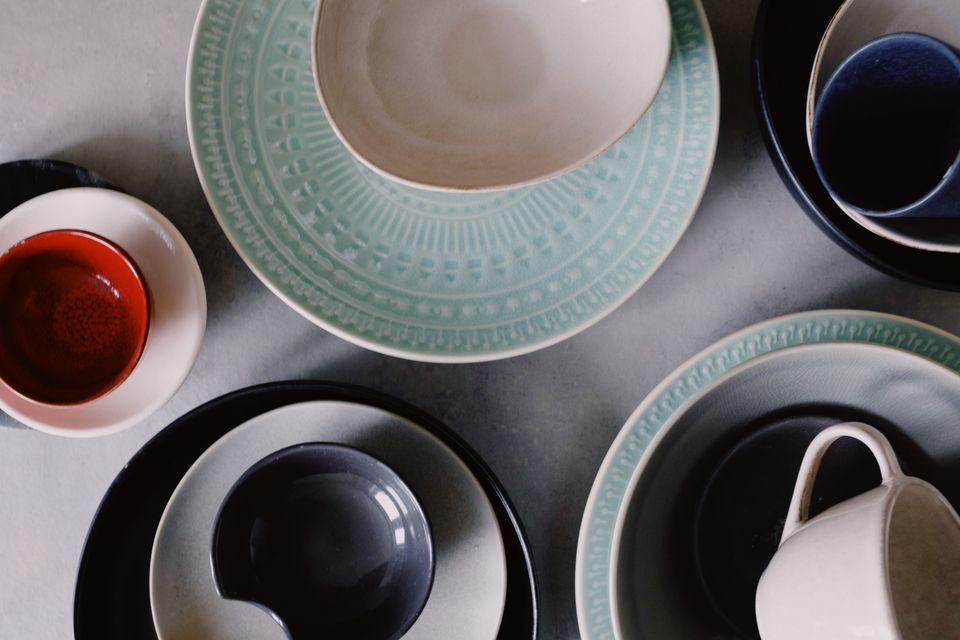
A plate can look attractive on a set table and still fit badly into your home. Oversized rims obstruct cupboards, deep shapes create tall stacks, and individual pieces may not fit between dishwasher supports. Start with the places available for storing and washing the plates before comparing colours or decorative details.
Measure more than diameter
Measure usable cupboard depth, allowing for the door and any hinges. The external diameter should fit without requiring the plates to stand at an angle. Then check the stack height of several pieces. Even a tall foot ring can occupy considerable room across a full set. On a small dining table, also consider whether a glass, cutlery and a shared bowl fit alongside each plate without rearranging everything at every meal.
Compare the space inside the rim
Two plates with the same outside diameter may offer very different usable areas. A broad decorative rim occupies space, while a shallow bowl shape holds more in the centre. Think about the dishes you regularly serve. A slightly recessed shape may be convenient for meals with sauce; a flat plate suits other foods. One versatile shape is often more practical than several specialist forms, each adding another stack to store.
Include washing and care
Compare dimensions and shape with the supports in your dishwasher basket. A deep or strongly waved rim may stand differently from your current plates. Explicit dishwasher approval matters alongside the physical fit. Check microwave suitability separately if you need it. A decorative finish or material name does not establish general permission. If you wash by hand, include weight and access around the foot ring in your decision as well.
Build the set around actual demand
Count how many plates you need between washes, then add a manageable allowance for guests. An enormous set offers little benefit if part of it must be stored outside the kitchen. Look for individually available replacements, especially when you want to use a particular range over time. With an unfamiliar shape, buying one example for assessment may help. Replacing one damaged old plate does not require buying an entirely new dinner service.
Before you buy
- Measure cupboard depth and stack height for the complete set.
- Inspect usable area within the rim.
- Check physical washing fit and product approvals.
- Set the quantity around washing frequency and visitors.
Everyday plates should fit the table, cupboard and dishwasher. A reliably suitable shape offers more value than an unnecessarily large complete set.