A measuring jug should make a quantity clear and then transfer it into another vessel with reasonable control. That sounds simple, but tiny numbers, unsuitable scales and an awkward spout can quickly complicate the task. One well-chosen jug is often enough when its markings suit your recipes and the way you normally work.
Choose the units you need
Look through frequently used recipes and note whether they use millilitres, litres or other volume units. Many parallel scales can look versatile while making the right one difficult to identify. Flour or sugar scales rely on assumptions about the ingredient and do not provide a universal weight measurement. When a recipe specifies grams, an appropriate scale is usually the more direct tool. Avoid extra markings that you must laboriously distinguish during normal cooking.
Read it from a useful angle
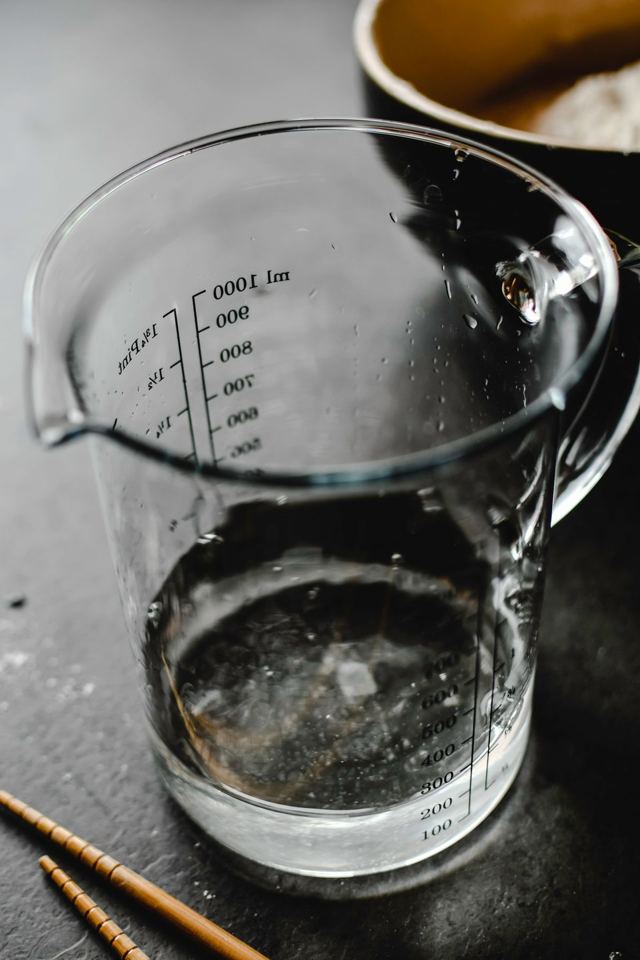
Check whether the numbers remain clear on a level surface and how you judge the liquid level at eye height. Faint markings become especially inconvenient with dark liquids or poor lighting. Some designs offer a view from above; establish whether that presentation makes sense to you. The goal is not the greatest possible number of subdivisions, but a scale whose useful steps you can identify without repeatedly guessing between indistinct lines.
Pouring is part of the measuring task
A comfortable handle should remain accessible when the jug is full. Consider whether its spout suits the narrow openings of your usual destination vessels. A large jug may hold small quantities but dispense them less conveniently than a compact version. Also measure clearance beneath your tap and in your drawer. A projecting handle increases the outside dimensions and may prevent the jug from nesting with other vessels you already own.
Check markings and care requirements
Read which temperatures and cleaning methods the particular product permits. Transparency does not automatically establish suitability for hot liquids or microwave use. Find out whether markings are moulded or printed and observe their care instructions. Heavily scratched walls may make readings harder. A set makes sense only when its small and large vessels each serve a particular purpose; several similar sizes mainly provide more items to accommodate in the cupboard.
Before you buy
- List recipe units and frequently measured quantities.
- Inspect the scale from your normal working position.
- Compare the handle and spout with destination vessels.
- Read temperature approval and care for the markings.
A useful measuring jug makes the required amount clear and easy to pour. Readable scales matter more than collecting a large number of vessels.