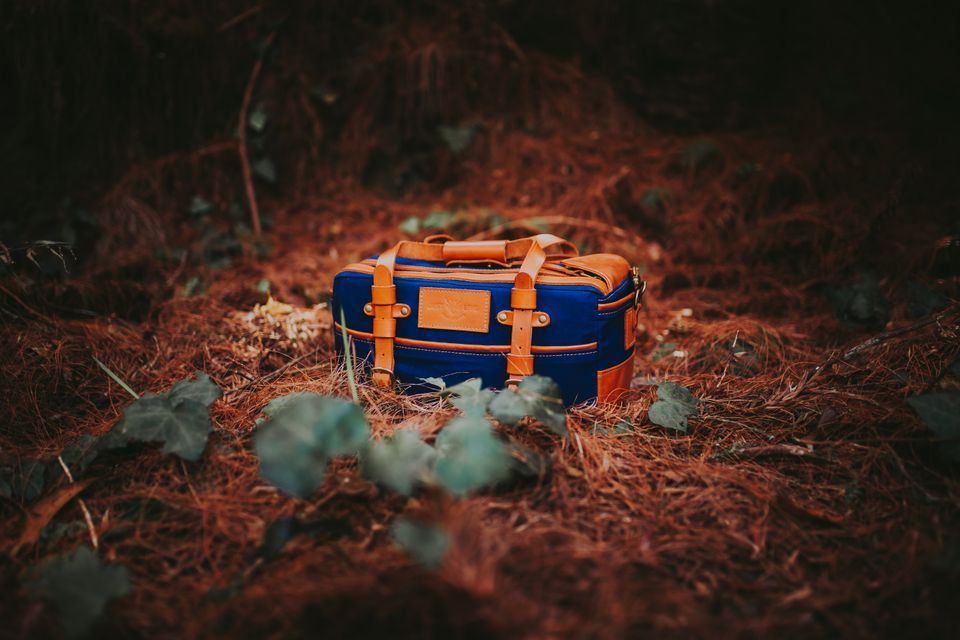
A weekend bag does not need the same layout as a bag for sport and work. Consider which items you pack together and which must remain accessible while travelling. A large main compartment can be clearer than many small pockets if you use your own pouches. Extra compartments help only when they fit your belongings.
Lay out a typical load
Gather clothing, shoes and other items for a usual short trip. Include bulky pieces such as a wash bag or second jacket. This reveals whether you need a wide opening or a particular internal height.
Compare usable internal dimensions with that collection. Outer measurements and a litre figure do not replace examining the shape. A long narrow bag may be difficult to fill despite sufficient volume if your normal items are broader than its opening.
Distinguish compartments by access
Put things you need during the journey in an accessible area. These might include a ticket, charging cable or small notebook. Check whether you can open the outside pocket while carrying the bag without exposing all its contents.
A separate shoe compartment often takes space inside the bag. Assess the remaining clothing area accordingly. If you carry shoes in a separate pouch anyway, a simple main compartment may offer more flexibility. Fixed partitions are most helpful when your packing pattern stays similar.
Try carrying and setting it down
Consider how far you usually carry the bag and whether you need free hands. Short handles, a shoulder strap and a removable carrying strap serve different purposes. Check handle spacing, adjustment and access to attachments.
A very large bag is easy to pack beyond a comfortable carrying load. Assess more than its empty weight. A structured base may make setting it down easier but leave the empty bag less compact to store. Choose this feature around your usual travel routine.
Include care and storage
Read how the outer material, lining and straps may be cleaned. Look for accessible corners and inner pockets where small things might be left behind. Where viewing is possible, check the zip along the complete opening. Decide where the empty bag will live at home too. A folding bag helps with limited storage if it still provides the necessary shape and handling when packed.
Before you buy
- Assemble a typical packing load.
- Assess compartments by access during travel.
- Match handles and straps to the carrying route.
- Check the interior, care and storage space.
The right bag supports your packing style and is comfortable to move. A greater number of compartments has no value by itself.