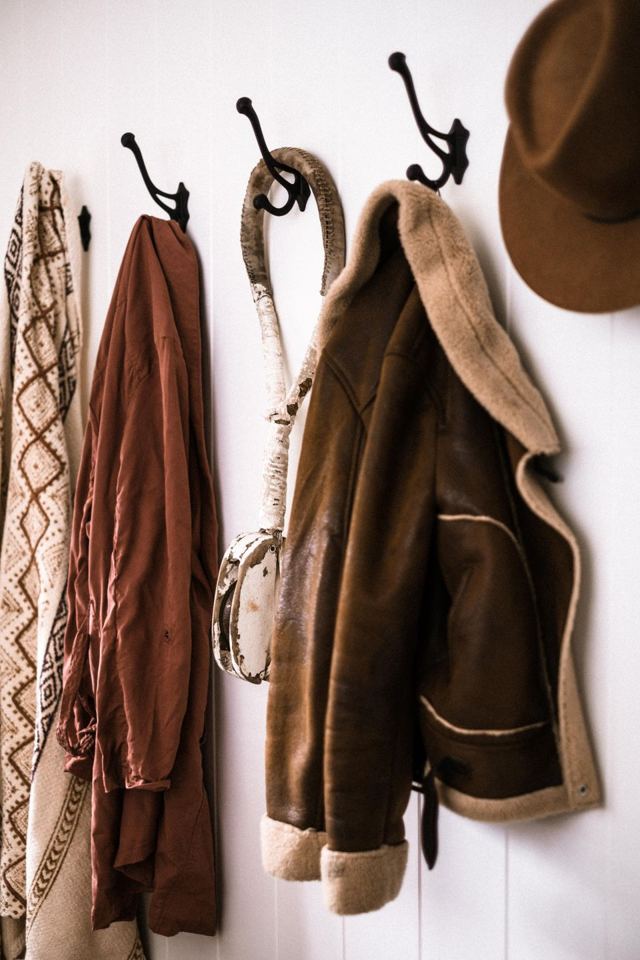
Wall hooks can relieve a hallway without taking much floor space. A row at one height is not practical for every household, however. Long coats, small bags and children’s jackets need different clearances. Consider who hangs what in each position. Then decide whether separate hooks or a shared rail suits the space better.
Measure what will hang there
Hold a typical coat or bag at the intended position. Include its actual width and length rather than just the hook dimensions. A coat may hang above a bench yet rest on its seat. A bag with long straps uses more height than expected.
Leave enough room beside the neighbouring item. Hooks positioned too closely mean moving someone else’s coat first. Bulky winter clothing needs different spacing from light scarves. The appropriate hook count therefore follows the objects and available wall area.
Check reach and the route through the hallway
Choose a height the intended person can comfortably reach. An additional lower row may help children put things away themselves. Check that clothes hanging above do not conceal the lower hooks.
Consider open doors and the usual walking route. Projecting hooks are awkward in a confined passage. Mark positions with removable tape first and rehearse coming in, putting things down and getting dressed again. This allows spacing changes before permanent installation.
Match the shape to the hanging method
A broad support works differently for a bag strap from a small narrow hook. Check that loops fit securely over the shape and that the surface is smooth. A hook that does not hold your usual clothing well offers little use despite attractive styling.
Double hooks can hold several items but still need clear space. Do not assume twice the capacity if the objects conceal one another. For daily clothing, clear assignments are often more convenient than tightly overlapping layers.
Match installation to the wall and instructions
Read fixing methods and load specifications before buying. Suitability also depends on the surface and intended installation. Adhesive products and screwed hooks have different requirements; a general load claim does not answer every location. Have the appropriate solution assessed by someone qualified if the wall construction is unknown. After arranging the hooks, check that the actual contents remain accessible without rearranging other items.
Before you buy
- Hold coats and bags at the intended position.
- Plan reachable heights and side clearances.
- Keep door movement and passage space clear.
- Match fixing to the surface and instructions.
Well-placed hooks follow household movements. The best arrangement lets each person hang up and retrieve their belongings easily.