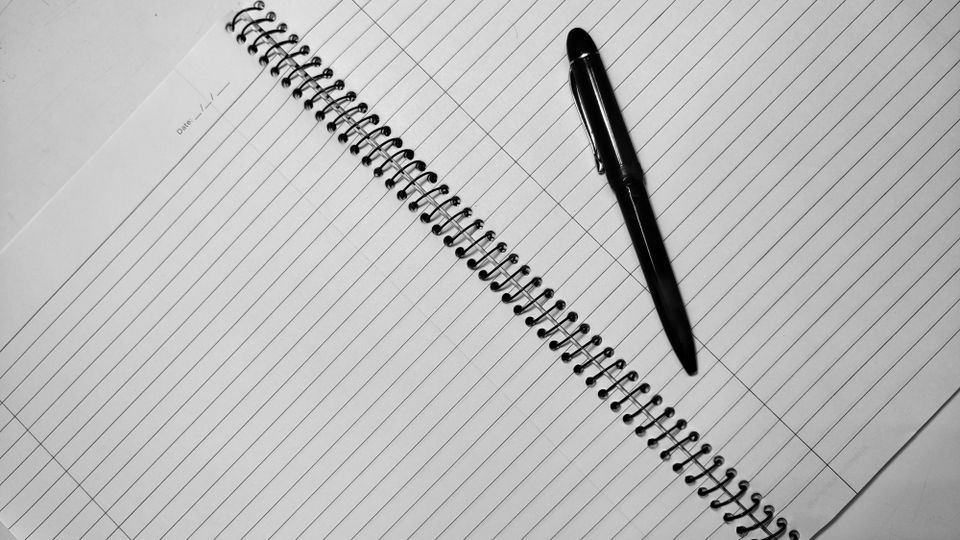
A paper spending notebook works without colour-coded dividers or printed templates. What matters is a routine you can maintain. Begin with a simple record of actual spending. You do not initially need forecasts or a perfect category for every small payment. After a few weeks, you will see which details help you make decisions.
Start with four columns
Make columns for date, description, amount and category. Keep the categories few and understandable, such as groceries, household, out and about, and other. A purchase should be quick to enter. Complicated subdivisions often mean everyday amounts are left out altogether.
Write your rules on the first page. For example, you might put all supermarket purchases under groceries or roughly divide the receipt between categories. Either approach can work. A consistent method makes later comparisons more useful.
Keep receipts in one place
Put receipts in a small sleeve beside the notebook and transfer them regularly. For payments without a receipt, make a brief note soon afterwards. A fixed time in the evening or on two days each week is often more practical than expecting yourself to enter everything neatly on the spot.
Mark any estimated amounts as estimates. Inventing missing details afterwards would imply accuracy you do not have. Visible gaps are more helpful for an initial overview than figures that only appear complete.
Avoid recording the same spending twice
If you list individual purchases, do not count the later credit-card statement as another expense. Withdrawing cash is initially just moving money to a different place. In this simple spending record, it is the subsequent use of that cash that gets entered.
A refund can be entered as a negative amount in the original category. Add a short explanation so that a repayment does not later look like an unusually cheap purchase.
Ask one specific question each month
At month end, add up the categories and choose a manageable question: how much went on spontaneous household purchases, or which supplies were bought repeatedly? Compare similar periods and allow for special events. One expensive month does not establish a lasting pattern. Choose one small change for the following month, then check whether your records helped you make that decision.
Before you buy
- Define a small number of categories.
- Transfer receipts and notes regularly.
- Do not count statements twice.
- Review one specific question each month.
A spending notebook is useful when its figures make a decision easier. A suitable routine matters more than immaculate presentation.